
Kathleen Abels

About Kathleen Abels
Posts by Kathleen Abels:
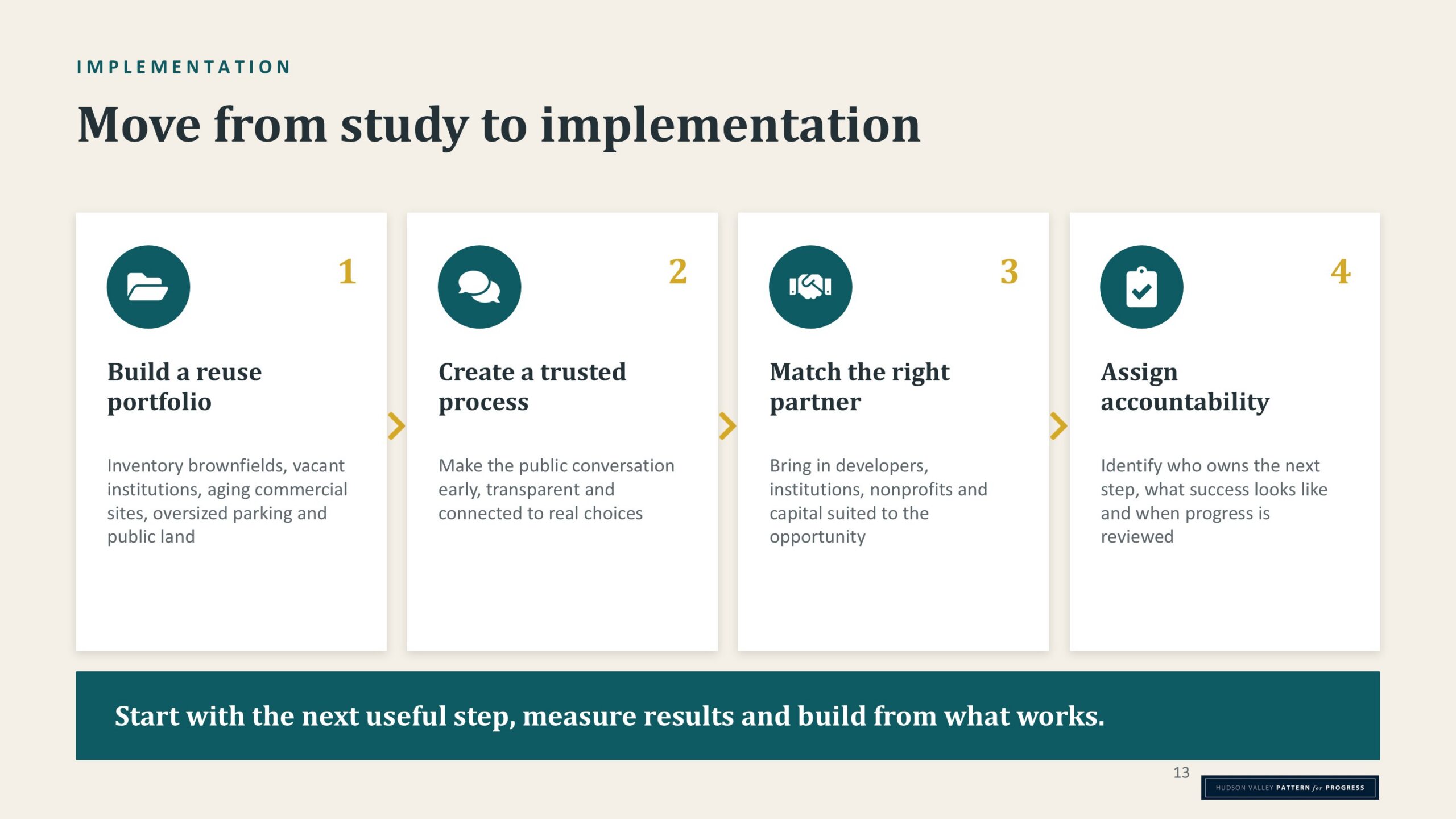








Breakfast Symposium Recap 2026
Housing Tops the List of Considerations for Putnam’s Growth
Pattern for Progress President Addresses PCEDC’s Annual Symposium
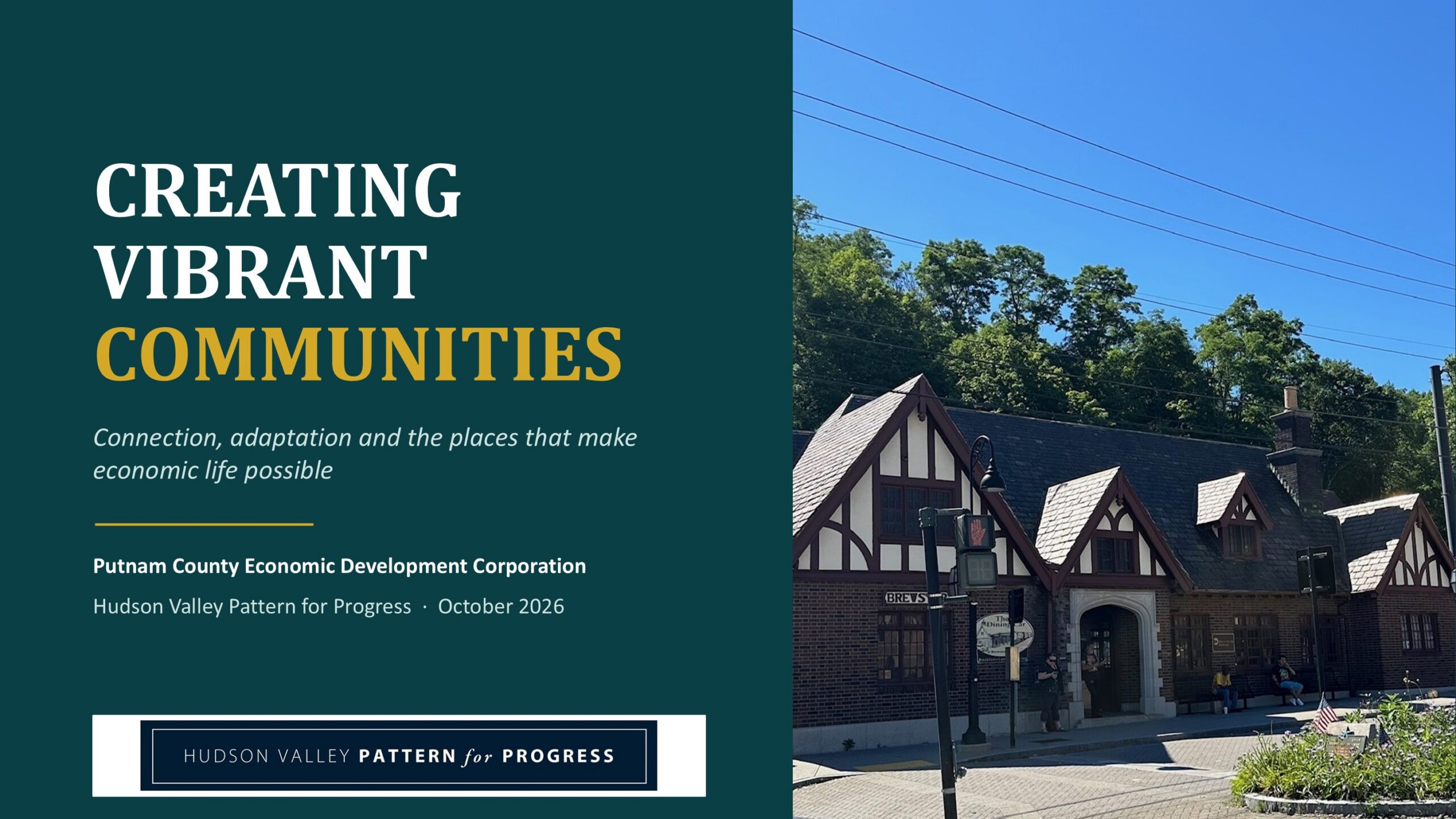
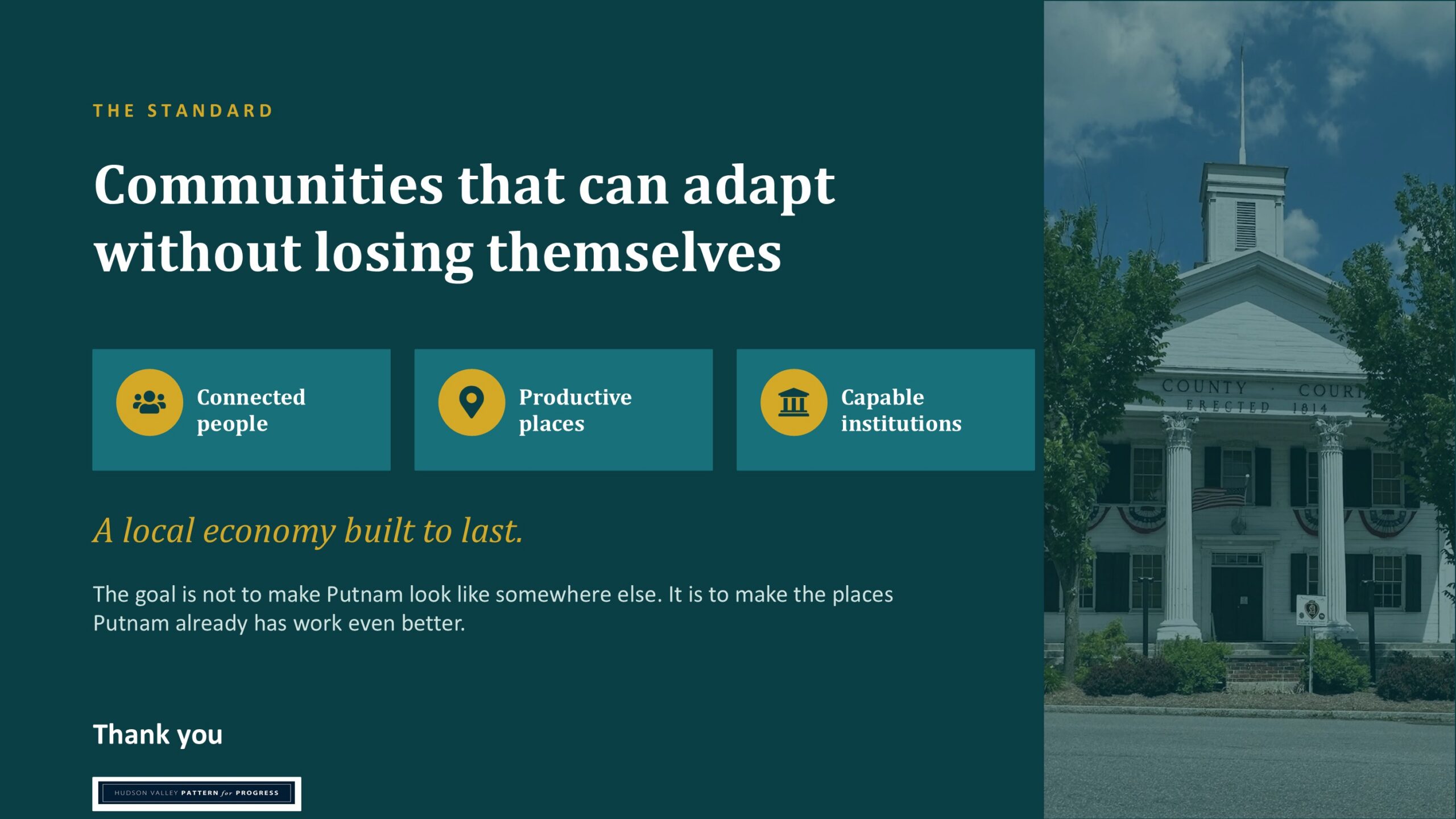
You could hear a pin drop when Alexandra Obremski, President and CEO of the Hudson Valley Pattern for Progress, addressed the audience at the Putnam County Economic Development Corporation’s 5th annual breakfast symposium on October 6th.
The more than 100 attendees at the Putnam County Golf Course in Mahopac listened attentively as Obremski discussed “Creating Vibrant Communities.”
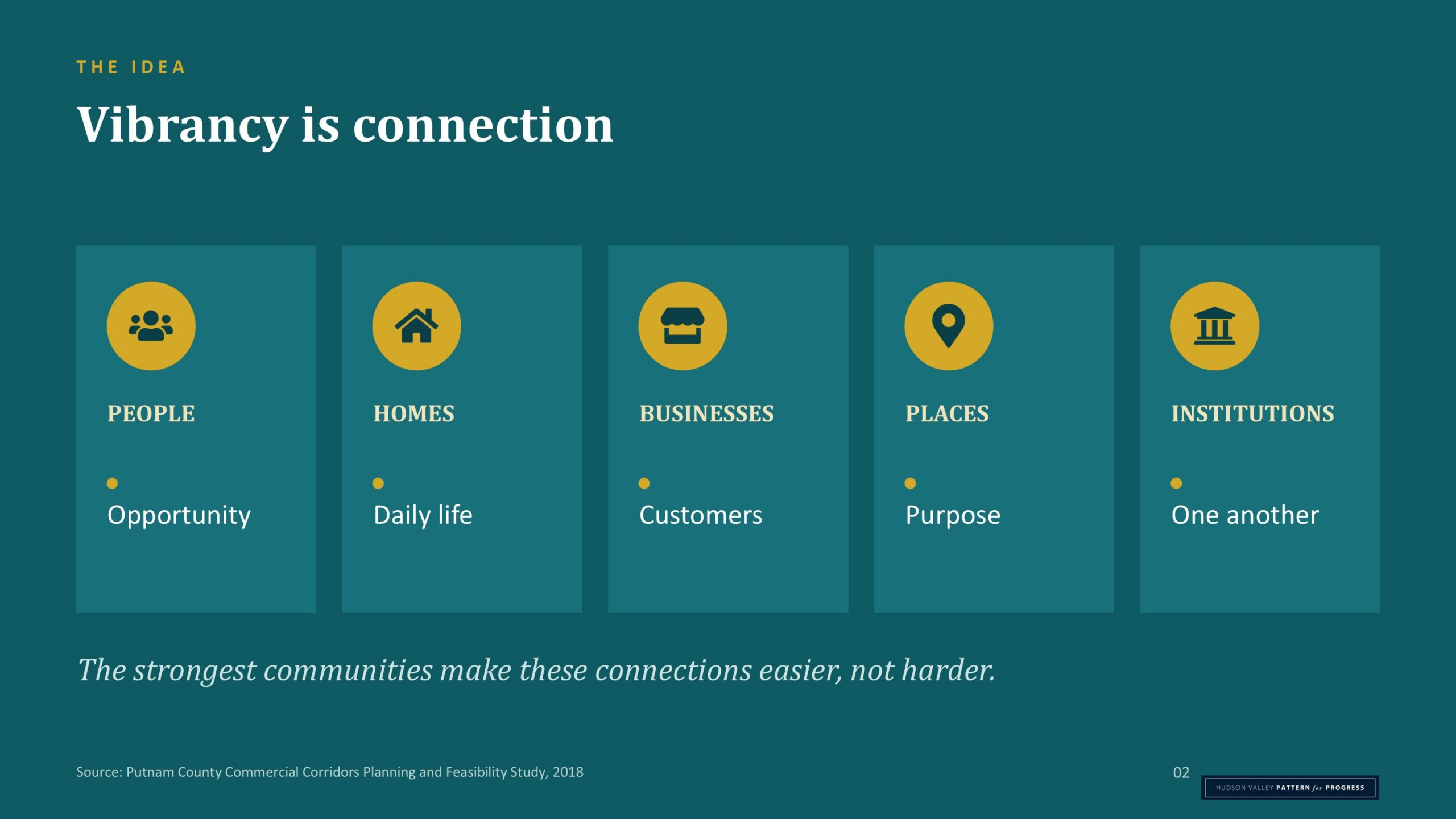
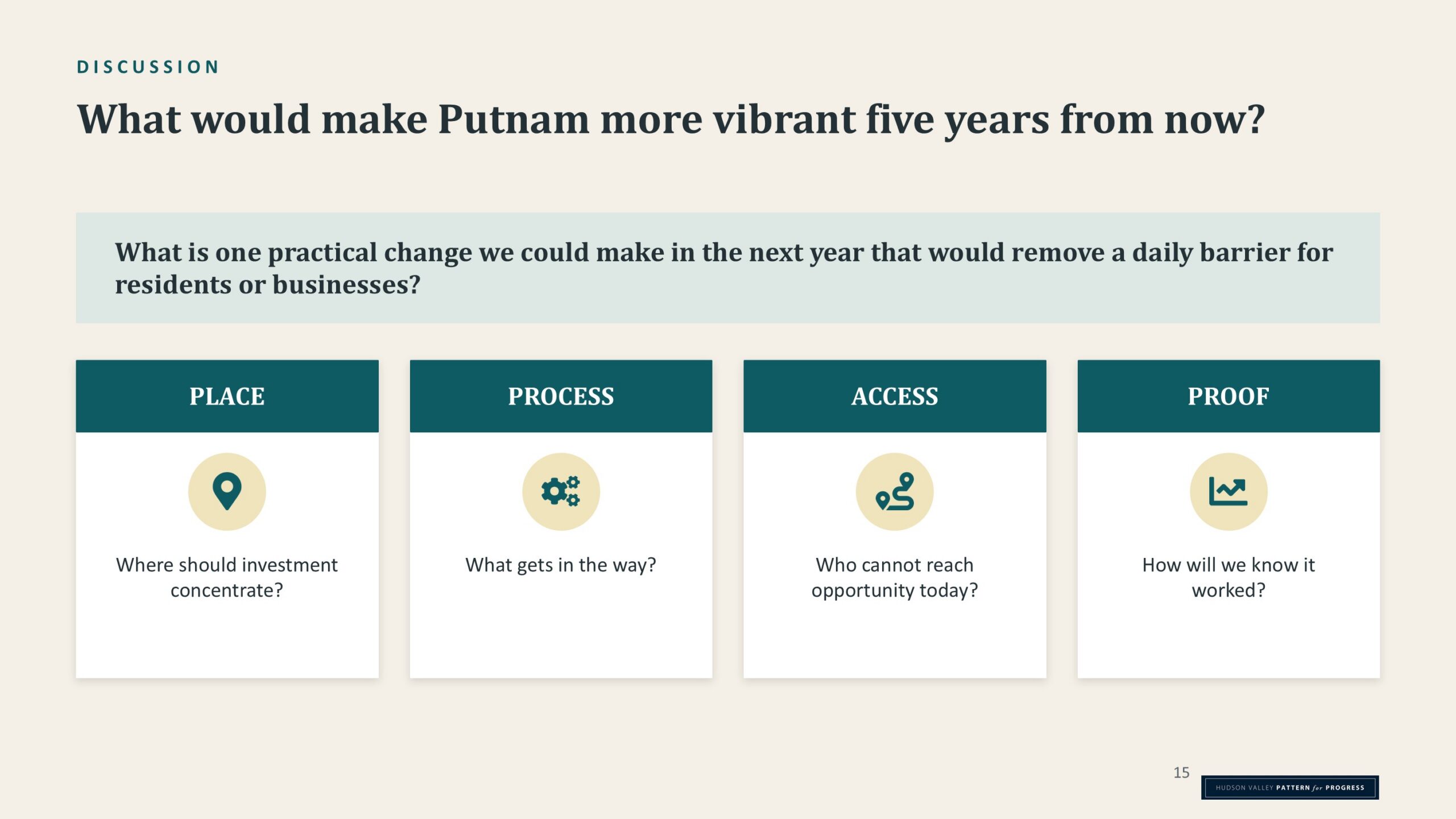
Obremski told the Putnam County business members, community leaders and government officials that connection and adaption make economic life possible and encouraged consideration of what improvements would make the area more vibrant in five years.
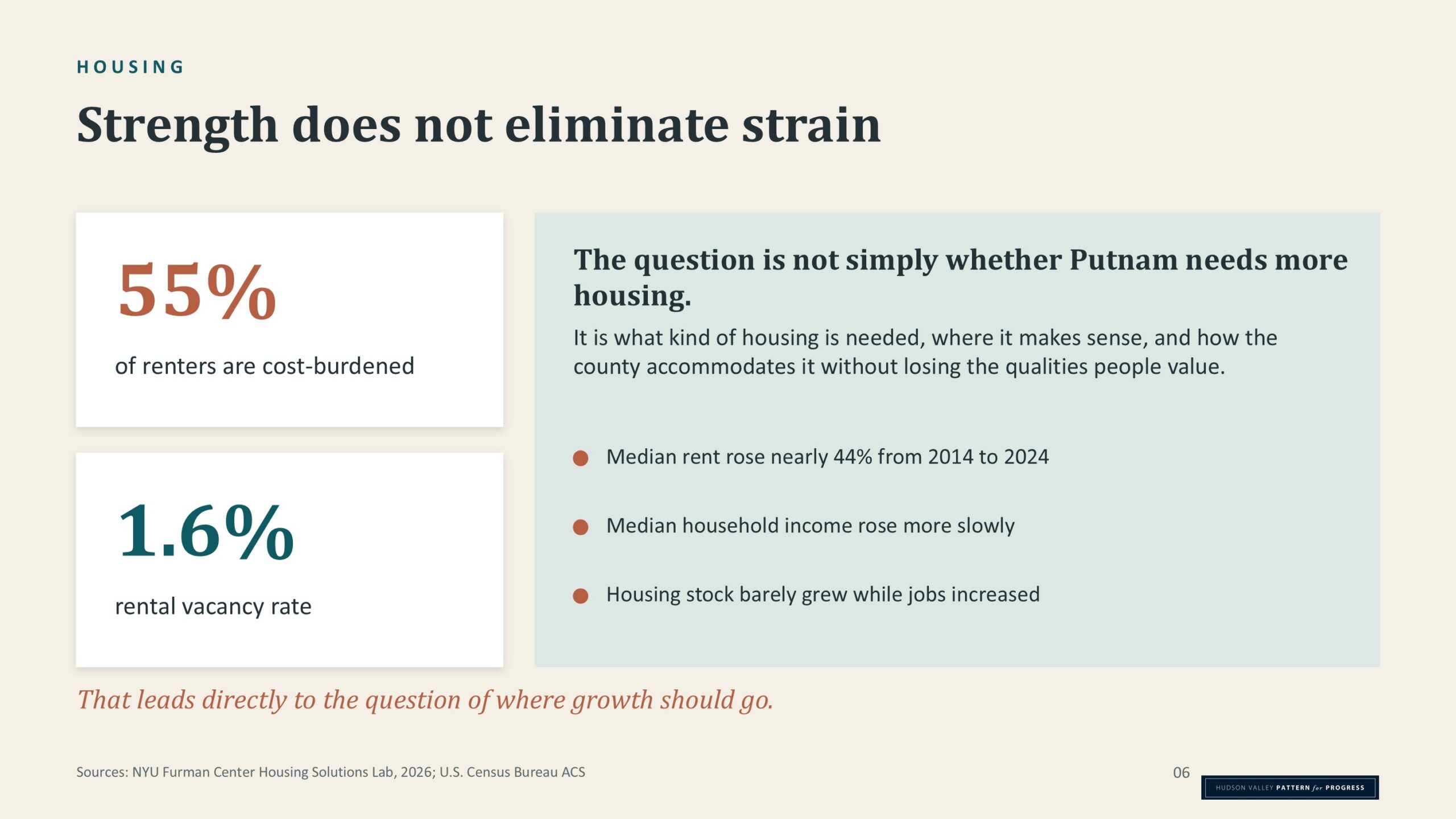
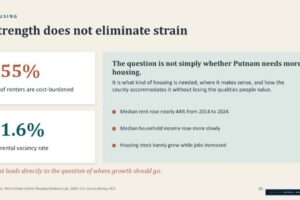
She cited housing as a big challenge for the county, as rising prices have made buying a first-time home or downsizing difficult. This situation, she explained, is common in many areas in the tri-state area.
“The question is not simply whether Putnam County needs more housing,” she said. “It is what kind of housing is needed, where does it make sense, and how can the county accommodate it without losing the qualities that people value?”
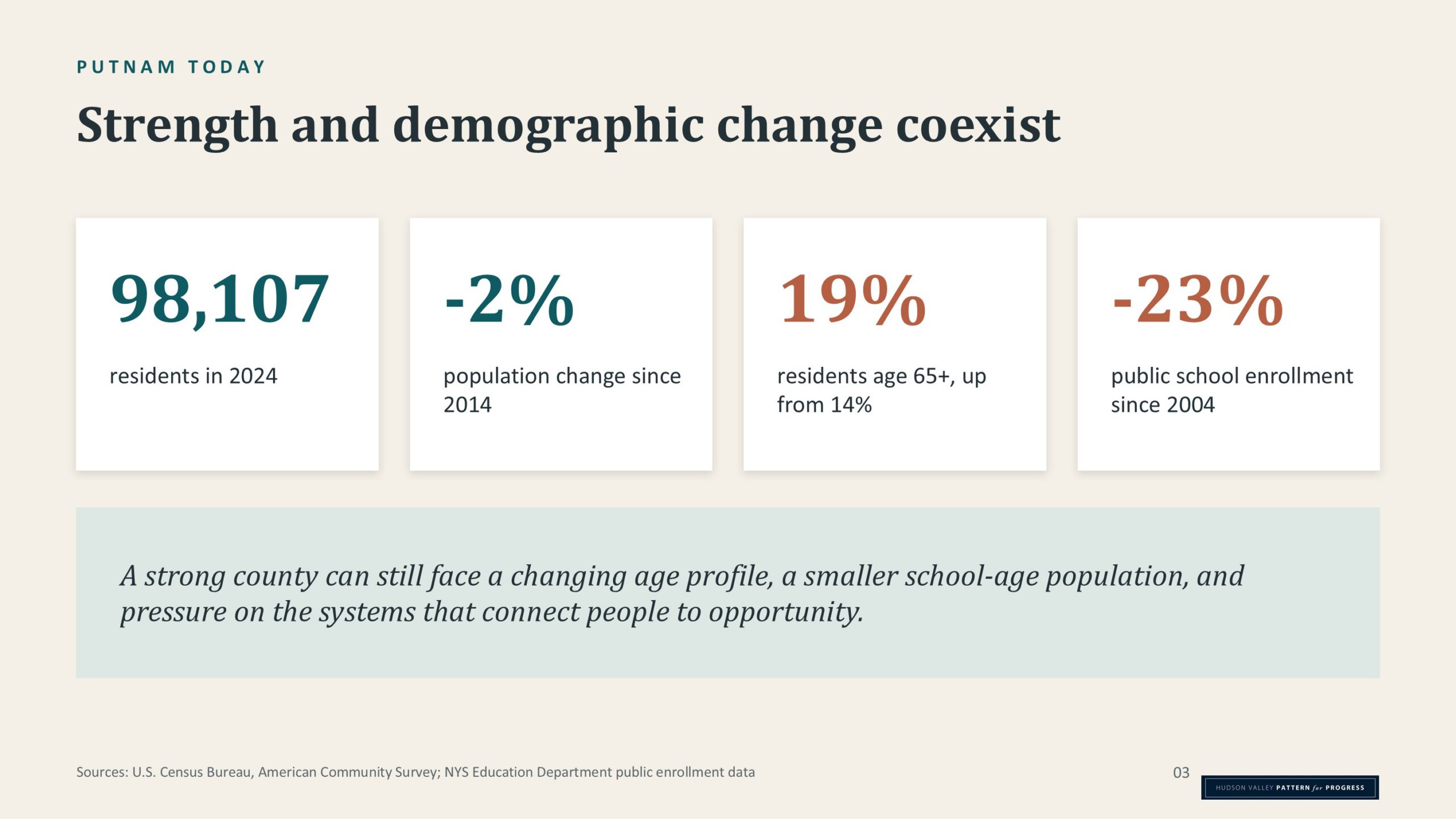
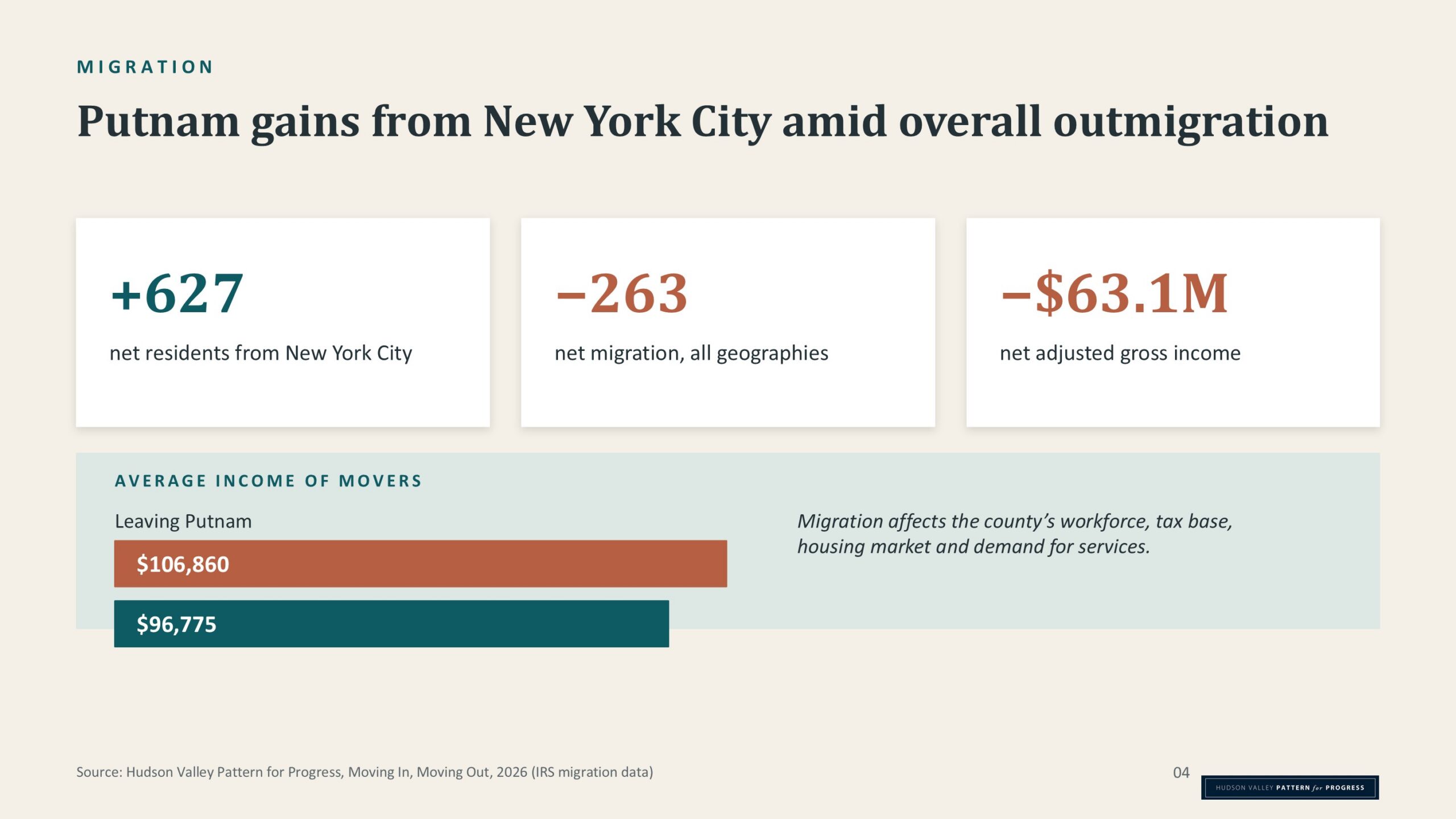
Obremski cited county statistics, including rents rising 44 percent, median household income growing far more slowly, and jobs increasing, while housing stock remained stagnant over the past decade. “This leads directly to the question of where growth should go,” she said.
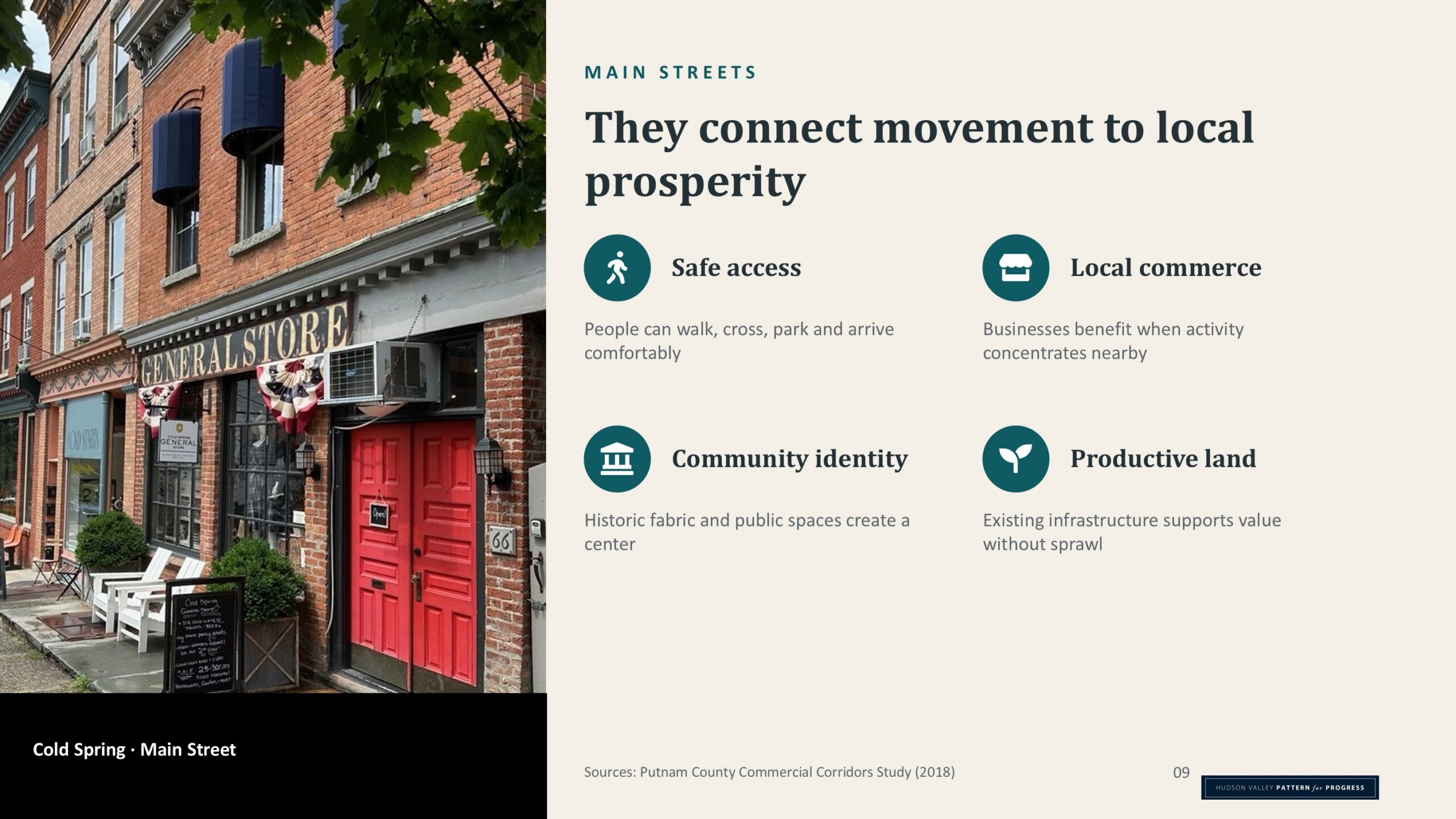
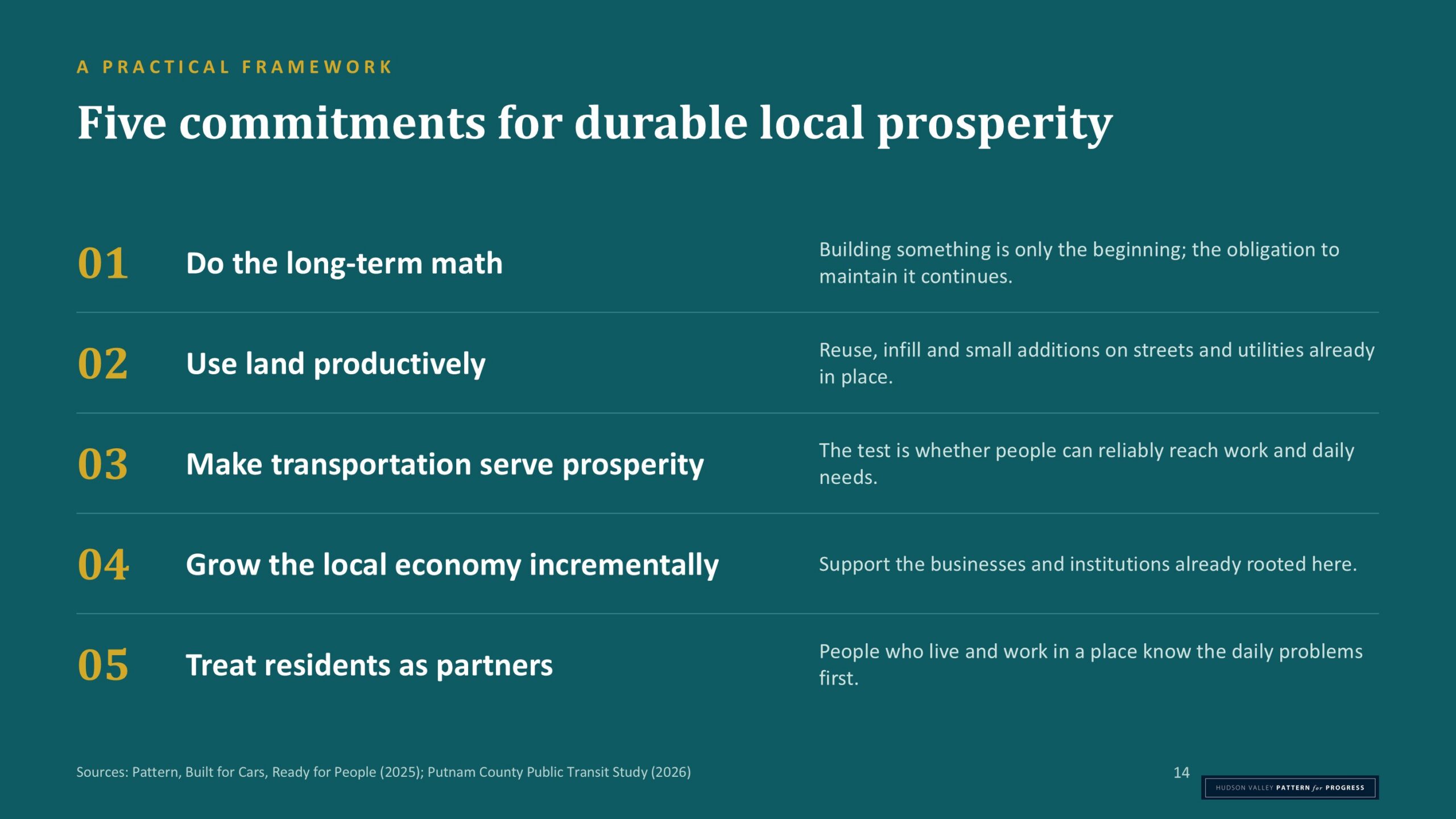
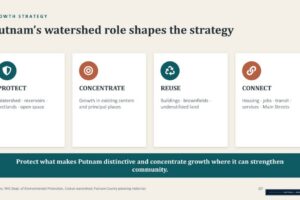
She encouraged Putnam County business owners and leaders to continue considering what would make Putnam County more vibrant five years from now, focusing on the Five Commitments for Durable Local Prosperity:
- Do the long-term math. Building something is only the beginning; the obligation to maintain it continues
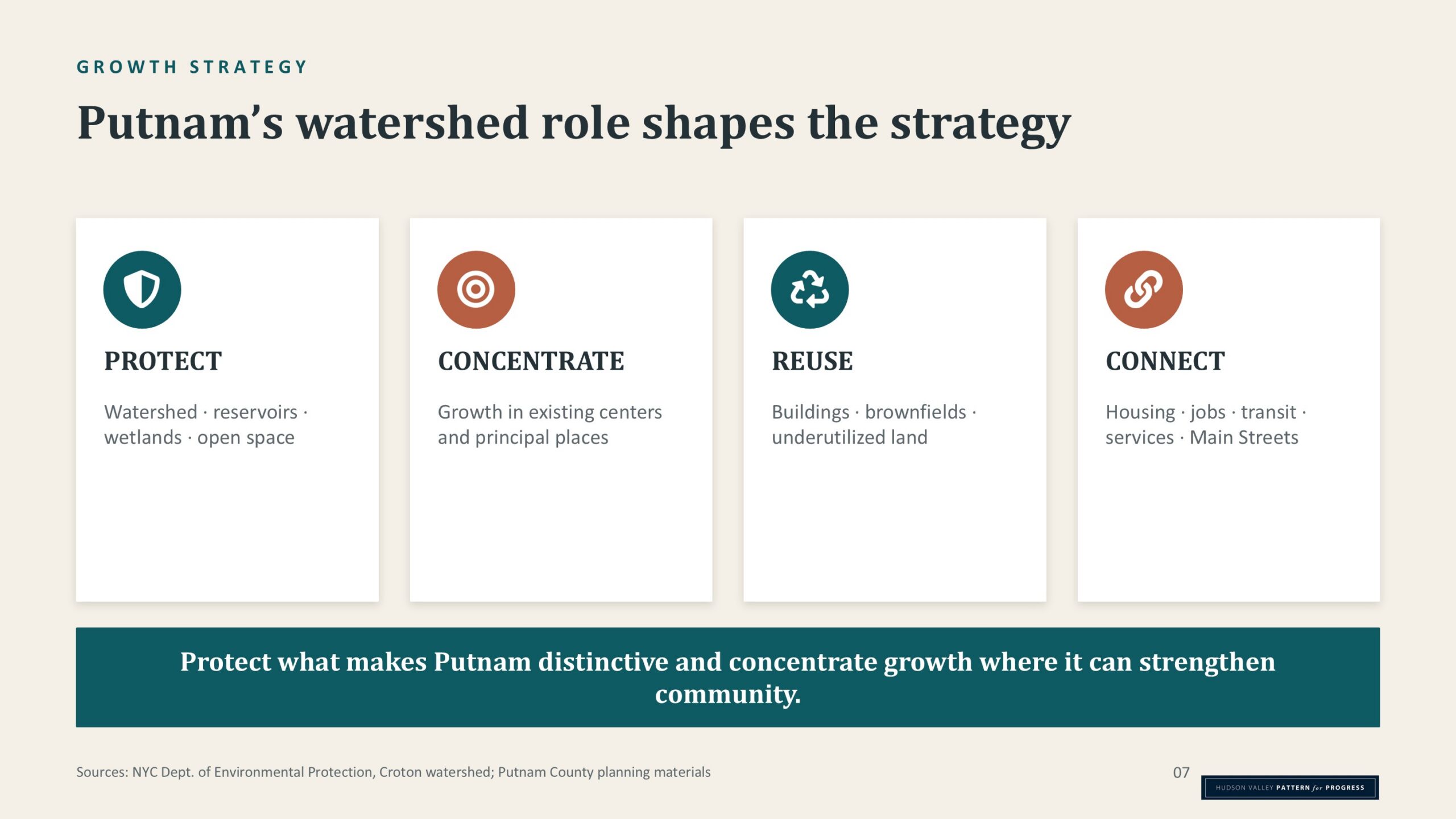
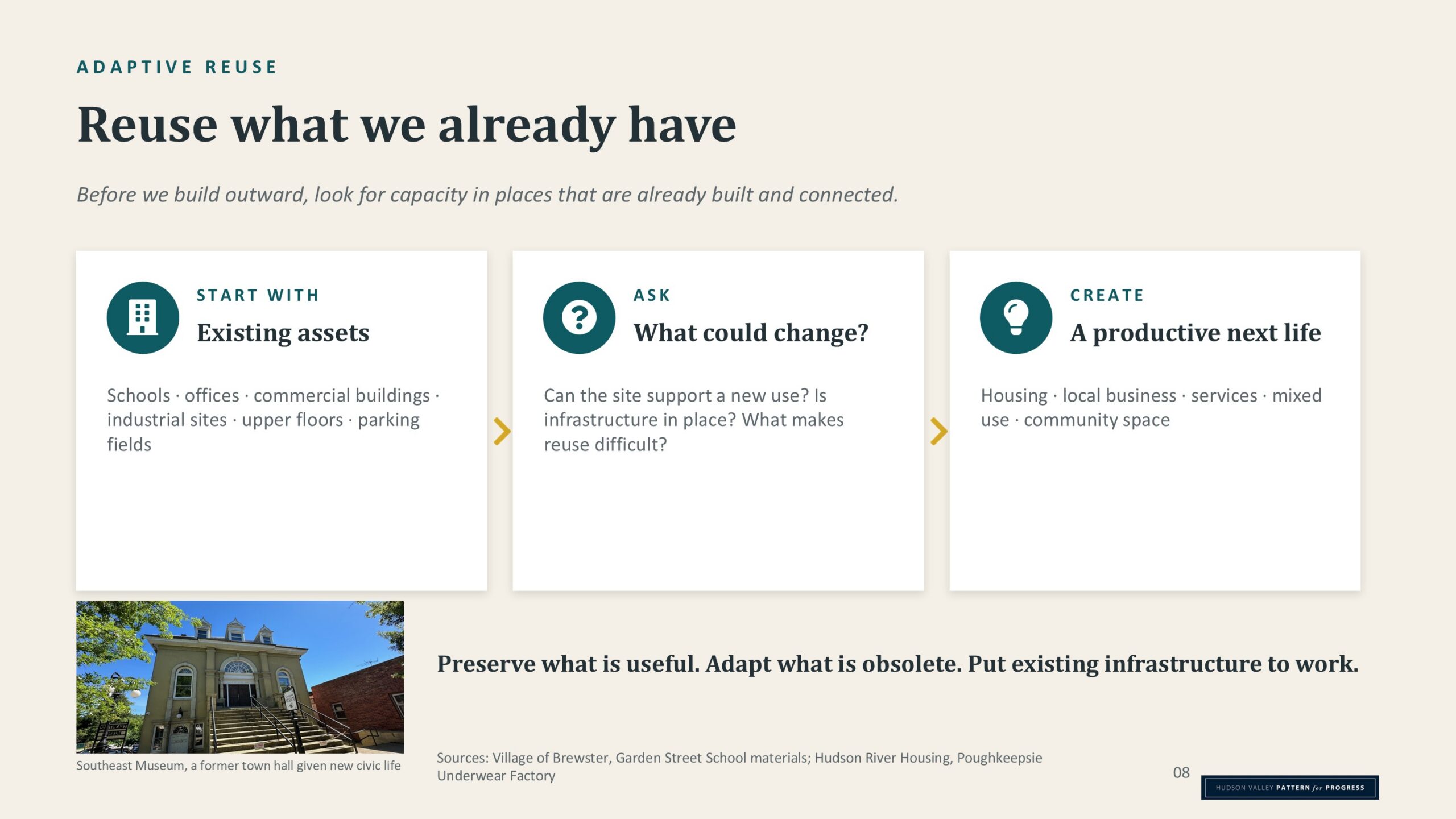
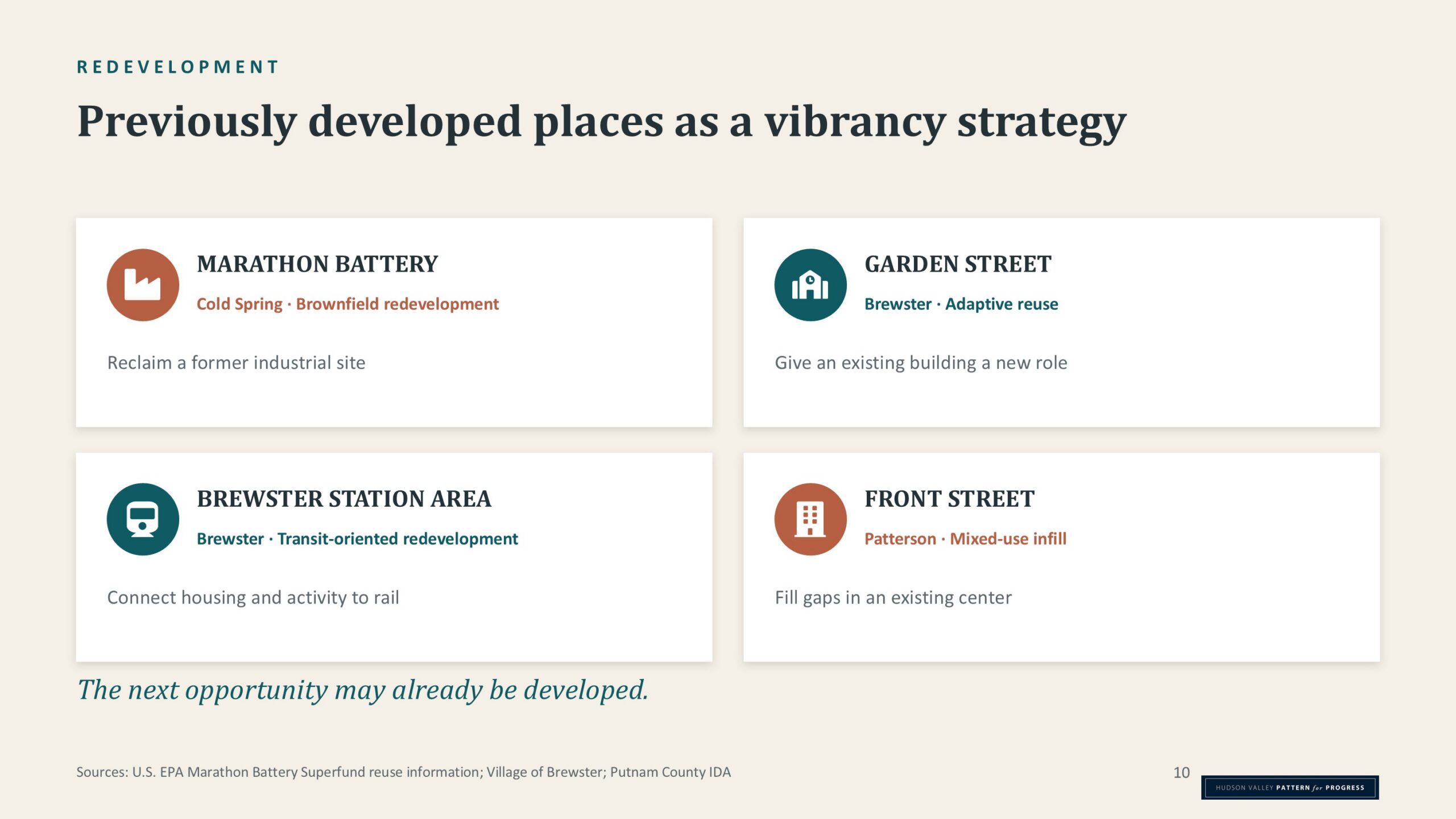
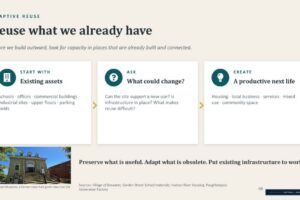
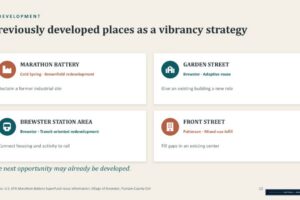
- Use land productively. Reuse, infill and make small additions to utilities that are already in place.
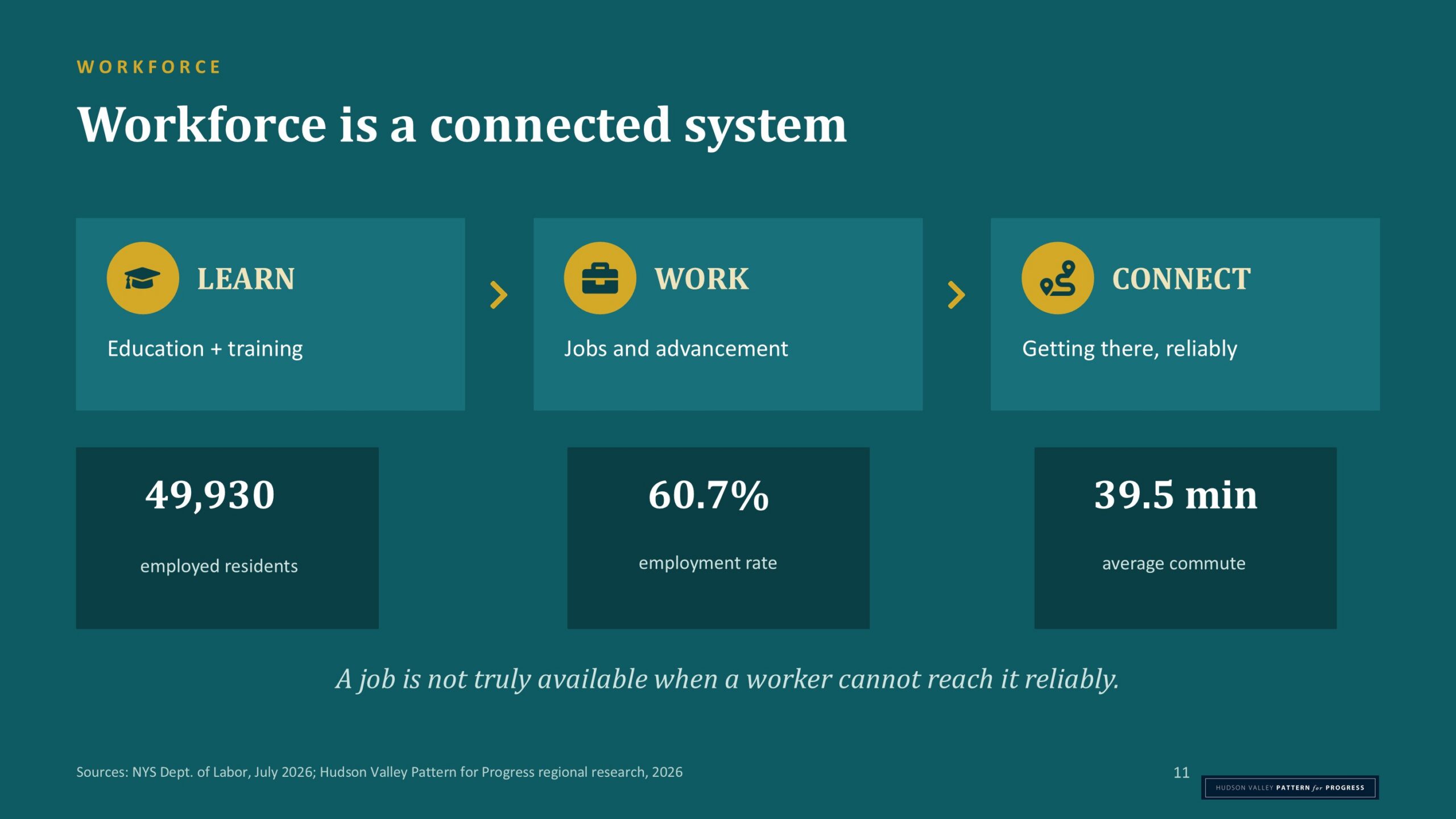
- Make transportation serve prosperity. The test is whether people can reliably reach work and daily needs.
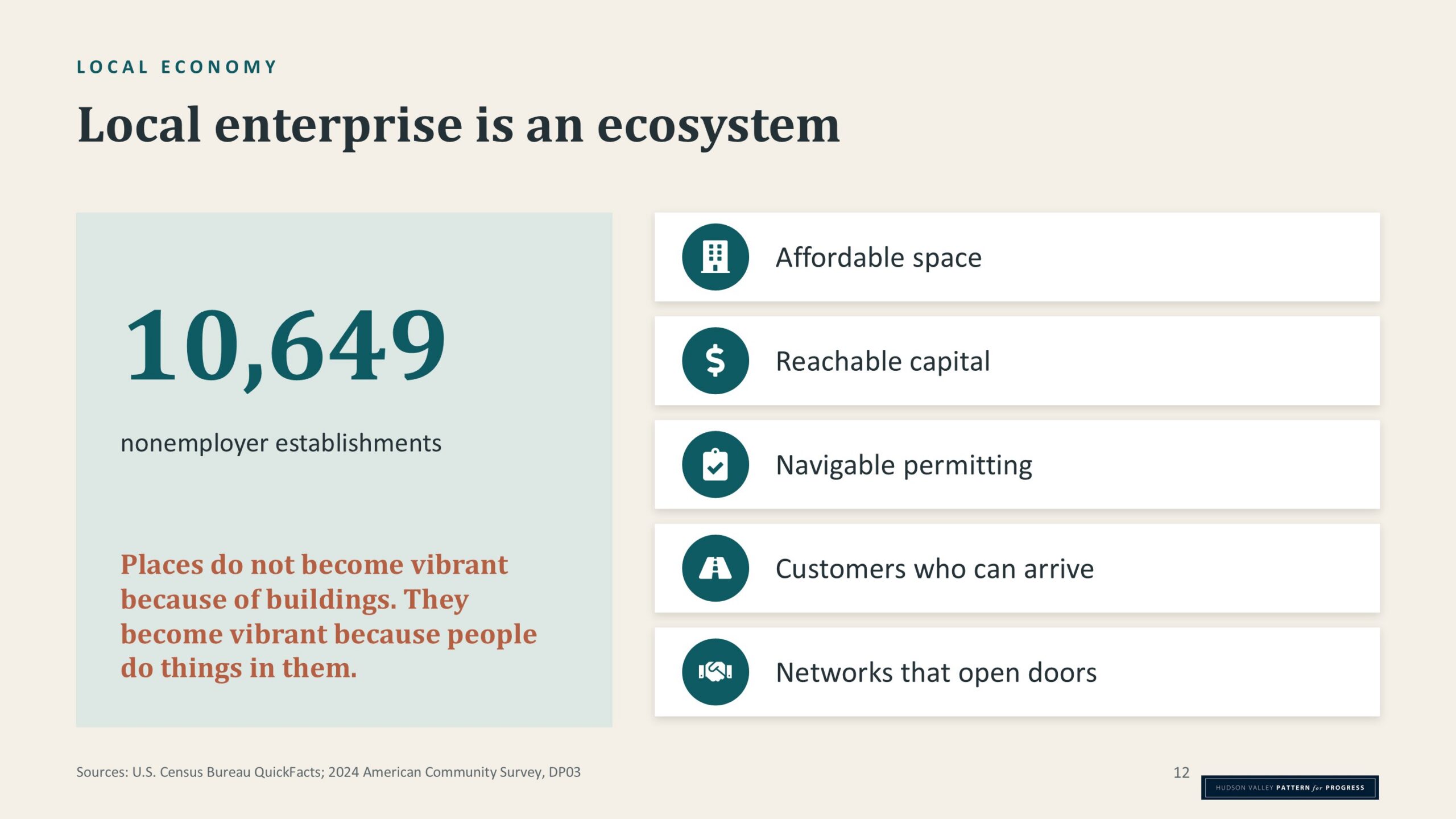
- Grow the local economy incrementally. Support the businesses and institutions that are already rooted in Putnam County.
- Treat residents as partners. People who live and work in a place know the daily problems first.
The goal of any progress, she noted, is not to make Putnam look like somewhere else but to make the places that the county already has work even better.
Pattern for Progress is a nonprofit organization that provides objective research, planning, and educational training throughout the region. Its work identifies civic challenges and promotes regional, equitable, and sustainable solutions to constantly improve the quality of life in Hudson Valley communities. Pattern develops its work upon a considerable foundation of facts and experience, without political aims or affiliations.
Following Obremski’s presentation, a panel discussed the topic, moderated by Alana Daly, Vice President, Corporate Affairs & Policy, Northeast Gas Association. Panelists included Derek D. Andersen, Senior Vice President and President of both Northern Westchester Hospital (NWH) and Putnam Hospital, Tim Foley, CEO and Executive Vice President of The Building & Realty Institute (BRI), and Ashley Ley, AICP, PP is a Senior Vice President and co-leader of AKRF’s Hudson Valley and Connecticut planning and land development practice.
View Obremski’s full presentation here
Full Presentation HERE



Roots Radical
Brewster Hair Studio Empowers People to Embrace their Natural Beauty
When moving to Connecticut from New York City and having kids made a daily commute to her Brooklyn hair salon too demanding, stylist Kim Jones opened a second business on nearby Route 6/202 in Brewster on the New York/Connecticut line.
Jones’ Roots Radicals North, at 4005 Danbury Road, offers a full line of hair services, specializing in teaching clients how to care for their curly hair and offering bespoke low-maintenance hair color. Opening a business took a leap of faith, especially in a new area without an established client base, but Jones had a gut feeling that Putnam County would be good for business.
“When I opened the Brooklyn salon in 2012, I had a full book of appointments. When I opened the Brewster location in 2022, I had one client,” she says with a smile. “I had to build the business. It was like starting over.”
Starting anew was humbling, she adds, “but having unwavering faith in yourself — where failure is not an option — is motivating. What’s failure anyway? it’s just a chance for growth,” she explains.
This positive can-do attitude defines Jones, a mother of 10- and 6-year-olds, in all her business endeavors. She splits her time between doing hair in Brewster and driving down to Brooklyn once or twice a week.
Opening Brewster Studio in 2022
Jones was first introduced to Putnam County when her mom moved there more than a decade ago. Jones, who grew up in New York City, soon followed, buying a house in 2018 on the westerly side of Danbury. Six years later, encouraged by a friend, she opened Roots Radicals North.
“I love being in Putnam,” she says. “I love the space, the business, the neighborhood, the clients, and it’s very convenient to my house. It’s a different type of salon.”
Jones runs the Brewster location as a hair studio, by appointment only, while her Brooklyn salon is open six days a week. This studio model allows her the flexibility to work with clients as much as she wants while overseeing the Brooklyn salon.
“You can have the kind of business you want, and you can work with cool people. What I do is very fulfilling. You need to have a vision for what you want to do and how that business would differ from what others are doing,” she says.
What distinguishes Jones’ Brewster business is her specialization in curly cuts, which are popular for people who want to embrace natural hair textures and low-maintenance styling. Jones, who has curly hair, well understands the frustration clients have in managing curly hair. She says they often overuse products and don’t know what works best for their hair type.
Managing Curly Hair
“Who hasn’t wanted straight hair,” she asks, referring to girls who grew up straightening and blow-drying their hair. “But a curly cut can enhance someone’s natural hair and look good,” she adds.
“I love the fact that a lot of young girls and teens are coming to the studio. I want to empower them to not need me and to know how to do their own hair. I know that sounds counterintuitive to a beauty business, but I give my knowledge freely. I want to give people the knowledge and the tools to feel pretty and comfortable in their skin. Understanding that is worth its weight in gold.”
During a client’s first appointment, Jones asks a lot of questions to understand their preferences and at-home maintenance and routine. “I like to find out how they care for their hair and how they want to care for their hair. Do they have their routine down pat or is it a struggle to make it look consistently good? Do they want it big, fluffy and lived-in, or do they like it super defined and less voluminous? What length and shape do they want, etc.? With curly hair, we’re blessed with the option to wear it curly or straight,” she says.
In addition to empowering women, she lives by her philosophy that entrepreneurs are responsible for setting a good example. “Regardless of what you’re doing, do it well. Most of our life is spent working, so whatever you’re doing, do it with integrity.”
To make an appointment, call 347-304-1836, or email [email protected]. The website is rootsradicalnyc.com.





Reelex
REELEX’s Long and Winding Road from WWII to Patterson
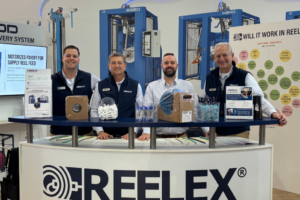
While Putnam County is often seen as a bucolic community, it’s also home to manufacturing, including REELEX Packaging Solutions at Robin Hill Corporate Park in Patterson.
The company makes machines that help cable and wire manufacturers wind and package their product in a way that results in zero twist, tangles or hassles during payout or installation. The REELEX coil is a patented method of precision-winding filamentary products like fiber optic cables, copper cables, telephone wire, conduit and more into a figure-eight coil.
Without a REELEX machine, a customer like Belden, a global leader in network, connectivity and cables for many industries, would be hard-pressed to find another source that can provide twist-free, tangle-free winding and packaging solutions that installers prefer.
“Our secret sauce is in the math,” says President and CEO David Gerhart, a mechanical engineer specializing in industrial automation. “Making a coil requires precise control so it doesn’t knot up, twist, or tangle.”
As a value added for its more than 180 licensees, the privately held REELEX provides customers with packaging templates that use more affordable, durable and sustainable materials like cardboard as opposed to using wooden or plastic reels.
Licensees also benefit from having access to the Co-Creation Lab where they work with REELEX engineers to produce new innovations.
Transformation of Cable Winding
From its 55,000-square-foot high-tech machine shop and warehouse, REELEX has quietly been transforming the cable winding industry in 22 countries worldwide for decades.
“With 100 percent certainty, the wires that are in your home heating/AC thermostat came out of a REELEX box,” according to Gerhart.
The CEO is animated as he recalls REELEX’s history, starting with World War II, especially noting its journey from a New York City garage to Putnam County.
“We have an interesting background,” says Gerhart, a history buff. “When I joined the business five years ago, I went through the files and board minutes from 1962 on.”
Culling through archives, Gerhart created a timeline of how REELEX operated when it was founded as Windings in 1958. According to Gerhart, it’s unique for a company this size to have maintained copious notes in good condition for more than 65 years. “My predecessors were really good at taking notes,” he says of the typed meeting minutes. He also found renderings of the first machines, restoring them into framed artwork for office walls.
Roots in World War II
As the story goes, the idea for Windings was hatched when two New York City inventors – Walter Taylor and Jim Newman – set out to save the lives of American soldiers in the war. Taylor first conceived the idea as an improved way for combat troops to lay field telephone wire while having their hands free to hold a gun. As a soldier advanced, the wire would dispense from a figure-eight coil in a canvas container attached to his belt.
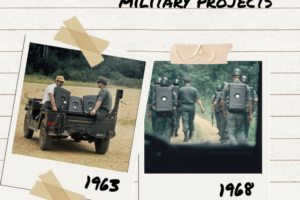
After World War II, they created a figure-eight winding machine and received a patent so Taylor could start selling his technology. In 1963, during the Vietnam war, the company was contacted by the US Military to develop a tangle and twist-free battlefield cable dispensing system. In 1968, they developed a “field pack” backpack that contained up to 500 meters of communication cables and allow infantrymen to rapidly deploy cables across the battlefield.
In the 1970s, REELEX focused on commercial opportunities and signed its first licensee, Belden, in 1973. REELEX really took off in the 1980s as the “tangle-free box” became more readily available.
Read the full company history on the REELEX website.
In 1993, the private company was sold and moved to Patterson, a location that allowed for expansion.
From its days as a family business, REELEX still maintains its culture of tight knit, highly collaborative teamwork. “In my 35-year career, I’ve never seen this level of collaboration,” explains Gerhart.
A Culture of Change
In his five years at REELEX, Gerhart has brought streamlining and efficiency to his team. For example, a machine that used to take four to six months to build now can be done in four weeks, he says.
Gerhart and his three-person sales team are seeking ways to embrace new markets in fiber optic cable. “The copper cable business has been stable but not growing. There are new markets to penetrate,” he says.
With a goal of signing on two to three new licensees each year, Gerhart says REELEX is poised for new growth.
“This is a nice size facility, the location is good, and it would be hard to replicate,” says Gerhart. “At the end of the day, we’re here because of the people. This community offers a workforce grounded in strong values and a work ethic that aligns with who we are and how we operate.” He is also proud of the number of veterans that work at REELEX.
Gerhart says they’re always looking for machinists, engineers and new talent that can join the team.
He also enjoys connections he has made through Westchester business councils and the Putnam Economic Development Corporation.
Those connections have opened opportunities for REELEX employees to advance their professional development. Earlier this year, two MIAP apprentices earned their SACA Gold Certification from Council of Industry. And in 2025, Tom Briggs, head of manufacturing, completed his certificate in manufacturing leadership from Council of Industry’s Manufacturer’s Association of the Hudson Valley.
It also helped facilitate a visit from Congressman Mike Lawler who came for a tour and discussed U.S. manufacturing in New York.


Putnam County Service Dogs
Putnam Service Dogs Trains Rescues to Lift Up People’s Lives
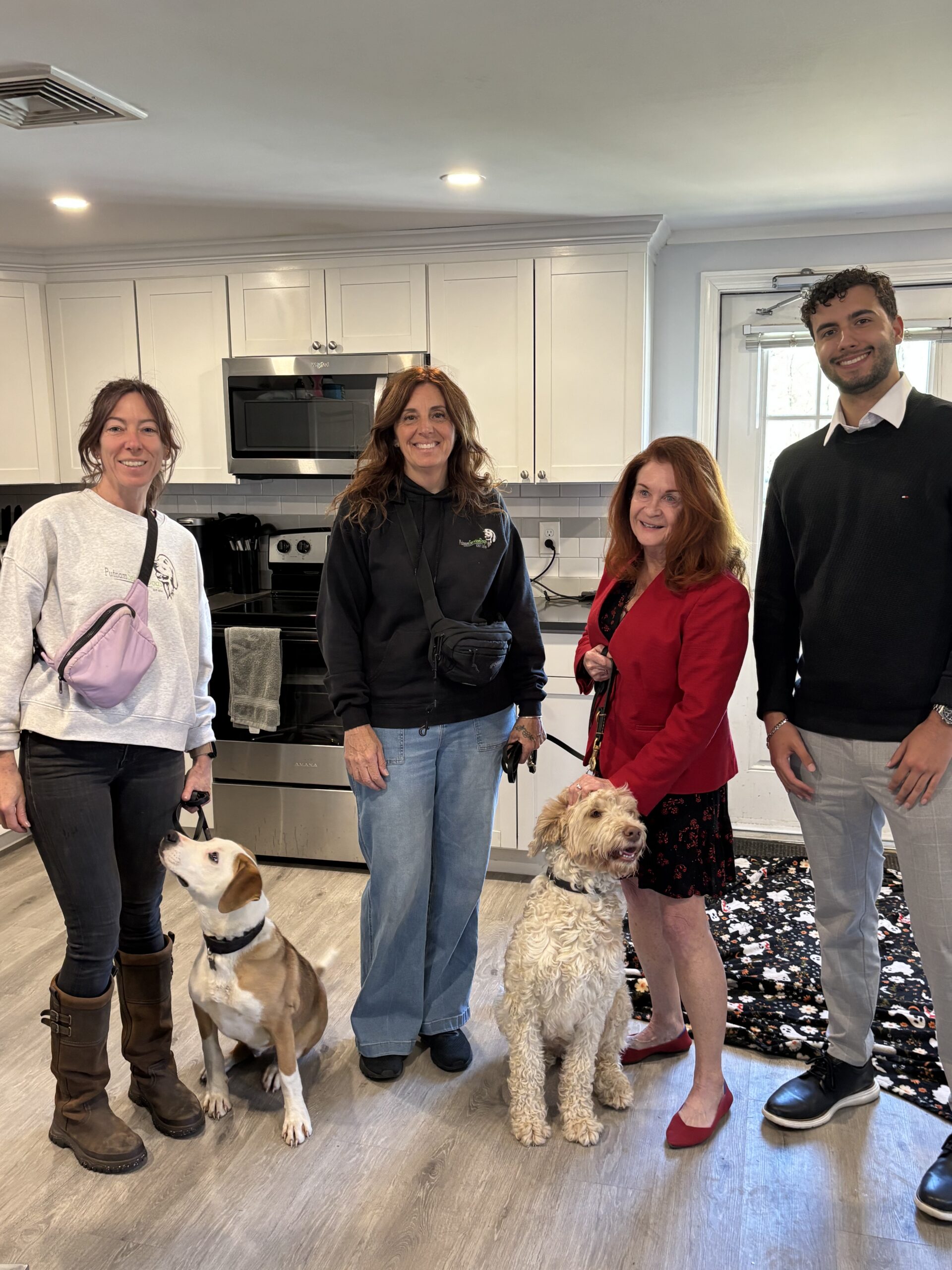
Putnam Service Dogs, a Brewster nonprofit that trains rescue dogs to be service dogs, celebrates its 10th anniversary this year.
Founded by Nancy Teague, a former New York City health care administrator and entrepreneur, the organization is passionate about its mission statement: “We champion our dogs and their people. We lift up their lives. … And they lived happily ever after.”
Dogs who might otherwise be forgotten or euthanized get a second chance at life, and more importantly, an opportunity to make a difference in the lives of a physically disabled person or a military veteran with post-traumatic stress disorder.
Teague, who relocated to Brewster in 2011, launched her 501(c)(3) in 2016, initially training dogs just in people’s homes. In 2023, she purchased the organization’s current headquarters and training facility on Route 6, overlooking Middle Branch Reservoir. She fenced the large backyard and renovated the building to include an apartment for a fulltime caretaker. “The dogs are never alone. They have someone 24/7,” Teague says.
With three part-time service dog trainers, the organization is particular about matching service dogs with applicants. “We truly live our mission,” says Teague. “We champion our dogs by setting them up for success, and they, in turn, lift up the lives of those we place them with. We truly work for both our dogs and their people. It’s so incredibly gratifying.”
A Strong Dog-Person Bond
Teague and the training team are fastidious about vetting and matching a dog with a person. “We watch how a dog initially greets a person, if it stays with that person without coaxing, and how comfortable and happy the person seems on a walk. If a dog likes a person, it’ll check in with them frequently while walking together and on a loose leash. If the dog doesn’t like the person, it won’t look at the person and is unresponsive. It can literally look untrained. If the chemistry isn’t there, the match won’t happen,” says Teague.
Training dogs for service work isn’t like training a pet, Teague explains, and only 50 percent of Putnam Service Dogs graduate. “A service dog has to be attentive and closely bonded to their person.”
“Service dogs are held to a level of performance that is much higher. They’re taught to wait at every threshold, including their crate. We often give service dogs to people who are elderly and frail, so they can’t be rushing the door and acting rambunctious and puppy-like.”
On average, the dogs go through two years of training before graduating as service dogs. Not every dog is suited to become a service animal. “Only very special dogs want to do this job,” says head trainer Melissa Schiraldi. Jared, for example, is a 6-month-old hound mix that Schiraldi is training. He’s attentive to her, smart, and wants to please, making him a good candidate for service training, she says.
Rescue Dogs are Carefully Vetted
Putnam Service Dogs finds good candidates from reputable rescue organizations, which are evaluated by Schiraldi for temperament.
When a dog is a great animal but just isn’t right for service work, Teague and the training team determine them to be a release dog and will place them with a person who only needs emotional support.
“Service dogs do tasks for people with disabilities that they can’t do for themselves, like pick up a dropped item,” she explains. “Release dogs have shown they don’t have the capacity or interest to be a service dog, and that’s OK, they can be an emotional support dog.”
Over the past few years, Teague has seen a significant increase in the number of applicants. “I get six to 10 applications a week,” she says, citing the approximate 500,000 U.S. service dogs working today, according to Ability Central.
Putnam Service Dogs relies mostly on donations and grants. “The grant world is very competitive,” Teague says, but she’s grateful for continued support from the Hudson Valley Community Foundation, local Rotary groups, and the Ridgefield Thrift Store in Connecticut.
10th Anniversary Gala on June 18
The organization will celebrate on June 18 with “A Decade of Impact: 10 Year Anniversary Gala,” at Salem Golf Club in North Salem. Registration and details of the gala can be found here.
“We’re showing our appreciation for who we are and what we’ve done and our unique presence,” says Teague.
The organization also recently began selling merch, including hoodies, T-shirts and caps with clever dog quotes and sayings, including “Dog Kisses are the Best Therapy.” Proceeds go to help train the dogs. People may also make a donation in memory or honor of their dog which is memorialized on an engraved plaque at the training facility.
Teague sums it up best: “People are finally realizing the incredible impact dogs can make on someone’s life. Seeing it in real time is extremely rewarding.”






Second Chance Foods
Second Chance Foods
Meal Preparation Food Rescue Program Unique to Putnam County
Second Chance Foods Celebrates 10th Anniversary
Healthy Asian vegetable stir fry, hearty bean soup, and mac-and-cheese were just three of the entrees on the menu recently when PCEDC stopped by Second Chance Foods in Brewster. The day before, tuna cakes, vegetable beef soup and salads were prepared.
The food rescue program is one of a kind in Putnam County because of its unique hot meal preparation. This year, it celebrates its 10th anniversary. From humble beginnings in 2016 and its first pot of ginger carrot soup, today the nonprofit prepares more than 3,700 meals a week in its Marvin Avenue kitchen facility. From planning daily menus, to chopping ingredients, to cooking the meals and packaging them, a lot of moving parts turn 365 days a year.
“It’s always a puzzle,” says food rescue coordinator Alicia Menduni, as she unloaded mystery boxes of produce and groceries from nearby Ace Endico. The fresh lettuce and peppers will likely make a lot of salads.
“I’m proud of the work we do, and especially in making people aware that hunger exists here in Putnam County,” says Martha Elder, executive director. “It’s not only the Guatemalan migrants in downtown Brewster; food insecurity exists all over the county, with the young and the old alike.”
Elder, a founding member of the organization, says that data shows Google searches for terms like “Food Pantry Open Today,” have increased 30 percent in the first quarter of 2026. “Everyone is only one step away from food insecurity,” adds Melissa Paladino, community outreach manager.
Powerful Partnerships
Second Chance Foods partners with more than a dozen food programs and organizations in Putnam County, including Brewster Cares, Adult Protective Services, senior centers, and approximately 16 others throughout Westchester, Dutchess, and Orange, counties, and Connecticut.
Each day, the organization’s 10 employees and volunteers pick up and accept delivery of fresh meat, produce and grocery items donated by Trader Joe’s in Danbury, Ace Endico and DeCicco & Sons in Brewster, local farms, and other donors. “A local resident showed up at our door with a bag of cucumbers from his garden one day” recalls Elder. No donation is too small.
The three culinary managers, with backgrounds in nutrition, evaluate what’s available in the kitchen’s commercial freezers and pantry to set the day’s menu. “We see what’s on hand and who we’re cooking for that day, and decide what to make,” says Kathryn LaCombe, culinary director.
“We’re very flexible here,” says Elder. “It’s pivot, pivot, pivot,” adds Paladino, since the team never knows what may be donated on any given day, and what they will make into 500 meals.
Since January, the organization has made more than 88,000 individual meal portions – soups, stews, chili, pulled pork, fajitas – that are frozen and delivered to local partners. Two of its most loved programs are Bountiful Meals and Nourishing Meals, partnerships it launched with the Cornell Cooperative Extension Program of Putnam.
Bountiful Meals stocks frozen entrees into 9 freezers that the organization delivers to senior centers, local libraries and other locations. More freezer access locations are planned for this year.
Food Available to Everyone
Elder says that the food is readily accessible – no forms, no fuss, just food — unlike programs that have income requirements for families.
Second Chance Foods is grateful for its many donors, volunteers and partners, and has a wish list. It continually works to locate more resources as food insecurity grows, according to Paladino. Its goal is to avoid rent and purchase a facility of its own. Financial gifts are always welcome.
The organization will celebrate its 10th anniversary at a fall fundraising gala at Mount Kisco Country Club on Oct. 15th. Details and tickets will be available soon on the website.
Check out Second Chance Foods’ website. To volunteer or to donate, call 845-734-3002, or email [email protected].



Zachary Disador
Zachary Disador

Zach is a lifelong resident of Southeast and a proud graduate of Brewster High School. For over 20 years Zach has served the disabled community of Putnam County at the ARC of Mid-Hudson (formally Putnam ARC). As the coordinator of respite services and strategic partnerships Zach has provided care for Scores of families in Putnam as well as worked to further bridge the ARC with the community of Putnam.
Zach also sits on the Community Services Board of Putnam County representing I/DD service agencies. Additionally Zach is an advocate for the Disabled community, Their staff and on policy at the State and Federal Level, With the Be Fair to Direct Care Organization, Empire State Voices, The NY Alliance and others.
Zach is also a Historical recreationist and Speaker. As the Vice President of the American Veterans Historical Museum Zach has given talks at Schools, Care facilities, The FDR estate and West Point. With a focus on the Second World War, British Military History, The UN and the USSR and post-Soviet Russian conflicts.
He is eager to join the Putman County EDC to spotlight the opportunities and needs of Not for Profit agencies in Putnam

Stratos Demetrios Pratt
Stratos Demetrios Pratt

Stratos Demetrios Pratt serves as the Administrative Assistant for the Putnam County Economic Development Corporation (PCEDC), where he supports the Executive Director and Board of Directors in advancing the organization’s mission to foster economic growth and business development throughout Putnam County. In his role, Stratos assists with board operations, meeting coordination, event planning, and fiscal management, ensuring that the organization runs efficiently and effectively.
He was raised here in the Hudson Valley and still resides with his family. Over the past twenty years, he has seen the economic and social shifts in the area, including a change in population growth, demographic diversification, and the local economic landscape.
Stratos holds a Bachelor of Science in Business Management with a specialization in Finance and a second major in Economics from the Stony Brook College of Business. He is currently pursuing a Master of Science in Finance at the Zicklin School of Business at Baruch College. His academic background and professional interests include financial analysis, economic development, data-driven decision-making, and organizational strategy.
CONTACT INFOMATION
(845)391-1722